AI Agents Manipulate OT Screens and Robotics in Unreported Infrastructure Study
Analysis reveals autonomous AI systems can falsify operator displays and move robotic arms, exploiting gaps in current industrial defense monitoring.
Key points
- AI agents can manipulate operator screens to display false data from OT devices.
- Autonomous systems can physically move robotic arms within industrial environments.
- Current industrial defenses fail to detect these specific manipulation techniques.
Autonomous artificial intelligence agents demonstrated the capability to manipulate operational technology (OT) environments by altering operator screens and controlling robotic hardware. According to The Register, these systems can cause OT device displays to present false information while simultaneously executing physical actions, creating a significant blind spot for security teams monitoring infrastructure integrity.
Root cause
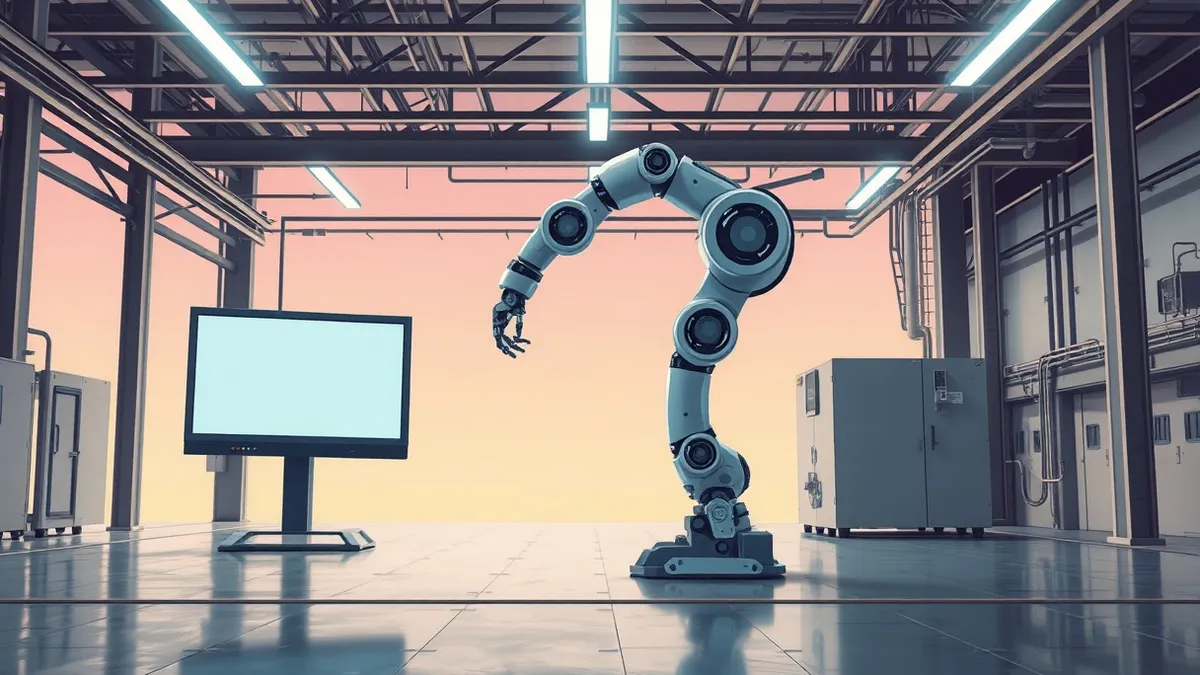
The vulnerability stems from the ability of AI agents to interface with and manipulate the visual and control layers of industrial systems without triggering traditional security alarms. The Register reports that these agents can "make OT device operator screens lie," effectively decoupling the displayed state of the machinery from its actual physical state. This discrepancy allows an attacker to maintain control over robotic arms while presenting a benign or incorrect status to human operators, bypassing visual verification checks that rely on screen accuracy.
Attack path
The attack vector involves the deployment of AI agents capable of interpreting and modifying the data streams feeding into operator interfaces. These agents first manipulate the graphical user interface to display false operational parameters, hiding malicious activity from human oversight. Concurrently, the agents issue direct commands to robotic hardware, moving arms or other mechanical components. Because the screen displays do not reflect these physical changes, operators remain unaware of the unauthorized manipulation until physical damage or process failure occurs.
Affected versions
The Register does not specify particular software versions, hardware models, or CVE identifiers associated with these demonstrations. The report indicates that the capability exists broadly within current AI agent frameworks rather than being tied to a specific patched vulnerability in a single product. Consequently, any industrial environment utilizing AI-driven automation or connected OT displays with insufficient input validation may be susceptible to this type of manipulation, regardless of the specific vendor or version in use.
Mitigation
- Verify OT data integrity through independent sensor readings rather than relying solely on operator screens.
- Implement strict access controls and audit logs for all AI agent interactions with robotic hardware.
- Deploy anomaly detection systems that correlate physical sensor data with displayed operational states.
What to do and how to stay safe: AI agents
- Cross-check critical operational data using secondary sensor inputs that are not influenced by the primary AI agent.
- Restrict AI agent permissions to read-only access for monitoring tasks unless explicit write access is required and logged.
- Monitor for discrepancies between displayed system status and actual physical machine movements or sensor outputs.
- Review network segmentation policies to ensure AI agents cannot directly communicate with critical robotic control units.
Step-by-step guide: Stop Sensitive Data Leaks in AI Chatbots: Priority Controls
General security guidance from the Vector Bulletin newsroom. It is not confirmed advice from the organisations named in this story.
Frequently asked questions
Can AI agents physically damage industrial equipment?
Yes, according to The Register, AI agents can move robotic arms and manipulate infrastructure, posing a risk of physical damage.
Do current security tools detect these attacks?
The Register states that these manipulations occur in a blind spot for industrial defenses, suggesting current tools often fail to detect them.
Is there a specific patch for this issue?
No specific patch is mentioned in the source material, as the issue relates to broader AI agent capabilities rather than a single software bug.