NVIDIA Agent Toolkit Integrates Nemotron Models for Secure Enterprise Data Grounding
The open-source NVIDIA Agent Toolkit adds new libraries and models to help enterprises ground AI agents in private company data without moving it.
Key points
- NVIDIA adds the Agent Knowledge Foundation to its open-source toolkit for enterprise AI agents.
- New components include CUDA-X libraries, Nemotron Retriever and the Kumo family of open models.
- Early adopters include Palantir, Databricks, Snowflake, Amazon and SAP for improved search and prediction.
NVIDIA has expanded its open-source Agent Toolkit with new tools to help enterprises build AI agents that use internal company data. The update introduces the Agent Knowledge Foundation, which allows agents to find relevant information and make predictions without requiring companies to move data or rebuild existing workflows.
Root cause
The expansion addresses the need for agents to access specific business context while remaining trustworthy. According to NVIDIA, agents are only as useful as what they know and as trustworthy as their boundaries. The new foundation helps builders customize and control agents, monitor their actions and govern how they operate within secure runtime environments provided by OpenShell.
Attack path
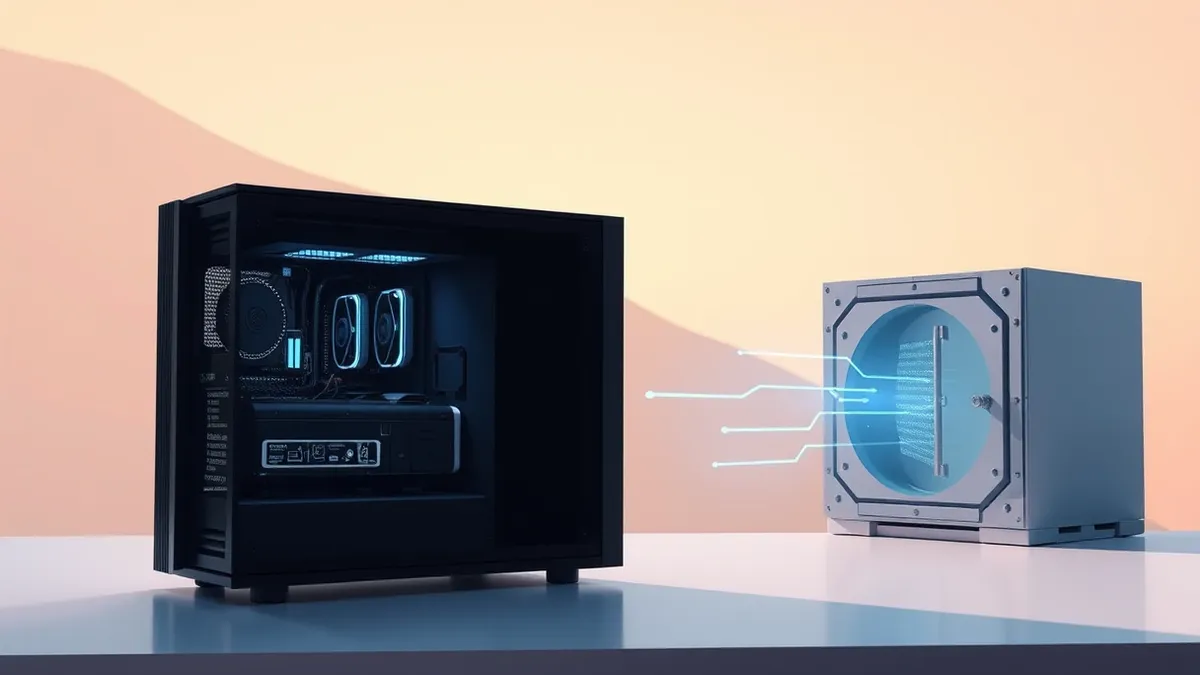
This release does not describe a security vulnerability or attack path. Instead, it outlines a technical architecture for grounding agents in proprietary data. The system uses NVIDIA CUDA-X libraries, including cuDF, cuGraph, cuML, cuOpt and cuVS, alongside a new Auto-Ontology library. This library translates raw data into familiar business concepts like customers and products, mapping how they relate to one another.
Affected versions
The update applies to the NVIDIA Agent Toolkit, an open-source project. It incorporates new open models such as Nemotron Retriever and the Kumo family, which includes Kumo Structured, Kumo Tabular, Kumo Relational, Kumo Time Series and Kumo Forecast. These components are designed to help agents locate relevant company information to answer questions and generate forecasts.
Mitigation
No security fix is required as this is a feature expansion rather than a vulnerability patch. The toolkit includes NVIDIA NemoClaw blueprints, which provide reference designs for building secure, specialized agents. A new blueprint for agent optimization offers a step-by-step starting point for improving agent intelligence over time, ensuring they perform better at their assigned tasks.
Why it matters
Organisations deploying AI agents need to understand how these systems access internal data. Agents must operate within defined boundaries to prevent unauthorized actions or data leakage. Security teams should verify that the runtime environment restricts agent access to only necessary resources. Governance controls must remain intact even as agents process proprietary information. Clear monitoring of agent behaviour is essential to maintain trust and compliance with internal policies.
What to do and how to stay safe: NVIDIA
- Review the access controls defined in your agent runtime environment to ensure they align with your data governance policies.
- Verify that the AI agents you deploy are limited to specific data sets and cannot access unrelated company information.
- Monitor agent activity logs for any unexpected queries or actions that fall outside their designated operational scope.
- Ensure that any third-party models or libraries integrated into your agent stack are from trusted sources and regularly updated.
Step-by-step guide: Password Policies Examples That Reduce Password Fatigue
General security guidance from the Vector Bulletin newsroom. It is not confirmed advice from the organisations named in this story.
Frequently asked questions
What is the NVIDIA Agent Knowledge Foundation?
It is a new component of the NVIDIA Agent Toolkit that helps enterprises turn raw data into intelligence agents can use for predictions and decision-making.
Which companies are using the new toolkit?
Palantir, Databricks, Snowflake, Amazon, SAP, ServiceNow, Zoom and others are building on the Agent Knowledge Foundation.
Does this update require moving company data?
No, companies can use the Agent Knowledge Foundation without moving data, rebuilding workflows or changing governance controls.